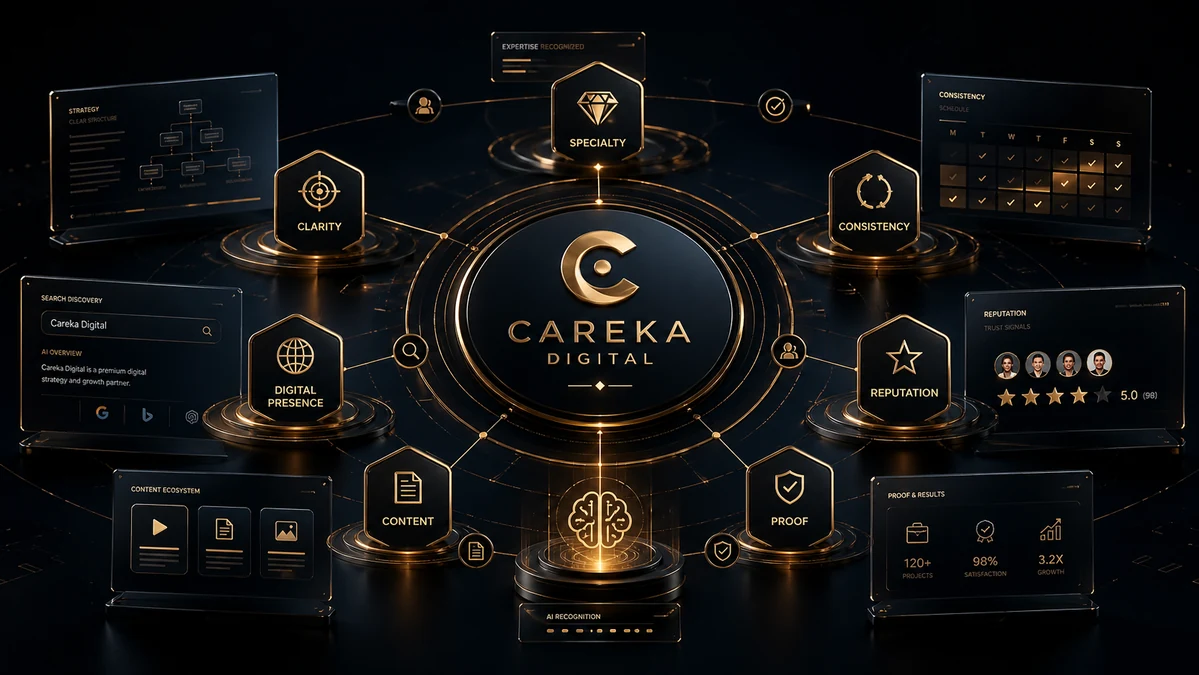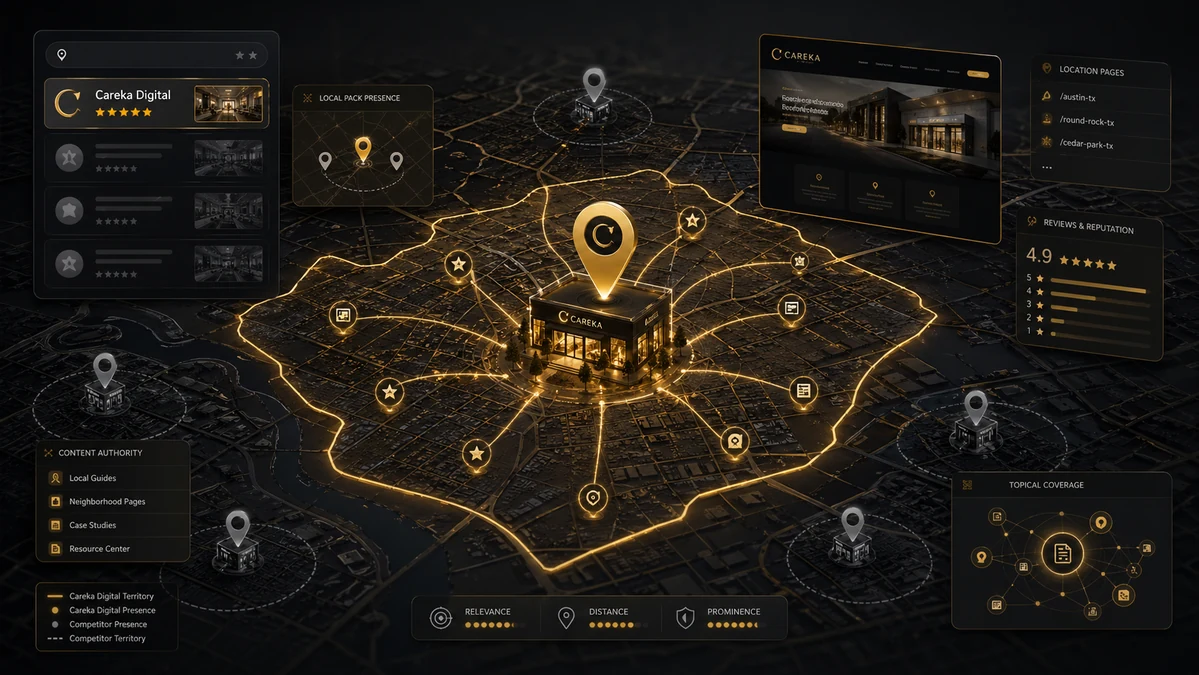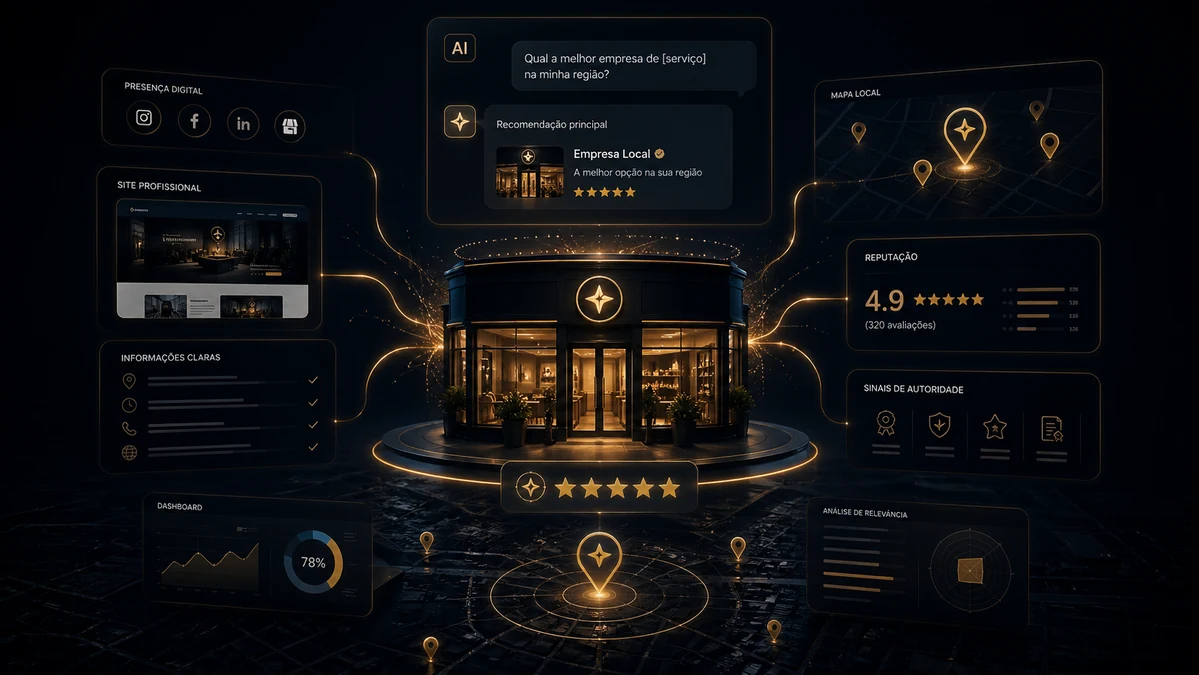

Real reputation is built behind the scenes of search: reviews, responses, images, consistency, comments, and signals distributed across the digital ecosystem. This is the part of the journey that rarely appears in a traffic report, yet it determines the commercial outcome. Before a lead messages you on WhatsApp, fills out a form, or agrees to a meeting, they have already compared signals, interpreted details, and formed an impression of your brand. Careka Digital treats this stage as perception engineering: a combination of visual design, content, speed, reputation, SEO, artificial intelligence, and offer clarity.
When we talk about digital reputation—what customers discover about you when no one is watching—we are not describing an isolated trend. We are describing market behavior. Today’s customer researches quietly, reads reviews, opens the map, tests the website, compares competitors, and asks AI tools for help. They do not simply want to find a company; they want to reduce the risk of choosing the wrong one. That is why strong brands do not wait for the conversation to build trust. They create a digital environment that already answers, positions, and filters.
This article explores the topic with a focus on professionals and companies that depend on trust and cannot afford a disorganized first impression. The goal is not to create a generic digital marketing manual, but to show how a premium presence is organized so it can be understood by people, search engines, and recommendation systems. A brand that masters this logic does not need to shout louder. It appears more clearly, sustains more value, and becomes a safer choice.
Digital reputation is what customers find when they research your brand without telling you. It includes reviews, photos, responses, news, comments, map presence, visual consistency, website quality, and alignment between promise and proof.
In practical terms, your digital structure needs to work like a decision room: every element should reduce uncertainty, increase confidence, and show why your company is the logical choice rather than just another alternative.
The Strategic Layer Almost No One Sees
The first layer is perception. It is shaped by details that may seem small: headline proportions, image quality, service organization, the tone of the calls to action, load time, color consistency, and clarity of the next step. When these elements work together, visitors feel they are dealing with a more prepared company. When they conflict, the experience feels improvised, even if the service delivered offline is excellent.
The second layer is proof. A brand can say it is good, but customers only relax when they find evidence. Portfolio work, reviews, case studies, testimonials, location, FAQ answers, dedicated pages, and a track record of delivery provide support. For professionals and companies that depend on trust and cannot afford a disorganized first impression, this proof matters even more because proximity raises the expectation of trust. Customers want to know the company is real, serves people well, and has the maturity to solve the problem.
The third layer is interpretation. Search engines and AI systems do not see reputation the way a person does; they interpret patterns. They read names, categories, copy, pages, reviews, links, images, structured data, and semantic consistency. When your presence is fragmented, they understand less. When it is organized, they have more context to associate your brand with the right topics: digital reputation, what customers research, social proof, online authority, trust before contact.
The Signals That Matter Before Contact
The first signal is clarity. Visitors need to understand quickly what you do, who you do it for, and why it matters. Attractive phrases without direction weaken the decision. Premium clarity is not shallow simplification; it is precision. It organizes the message so customers do not have to decode the brand before trusting it.
The second signal is visual authority. Typography, spacing, contrast, rhythm, and imagery communicate value before the copy is even read. A refined visual structure creates a sense of care. And online, care is interpreted as competence. Customers think: if the brand treats its own presence with this level of attention, it will probably treat my project or service with similar seriousness.
The third signal is consistency. A premium website paired with an abandoned local profile does not work, nor do strong reviews next to a confusing service page. Decisions are made based on the whole system. Consistency across the website, Google Business Profile, Instagram, portfolio, service experience, and editorial content creates a straight line between promise and proof.
A brand is not judged only by what it promises. It is judged by the full set of signals it can sustain while the customer is still silent.
The Impact on Local Businesses and Premium Brands
For local businesses, trust has a concrete dimension. Customers want to know whether you serve their area, understand the local context, have real proof, have earned the trust of people nearby, and whether your positioning matches the price you charge. That is why digital reputation — what customers discover about you when no one is watching — must connect with location, reputation, and digital presence. Digital does not replace local relationships; it prepares the ground for those relationships to begin with greater confidence.
A company can be technically excellent and still lose ground to another company that communicates better. That happens because the market does not choose competence alone; it chooses perceived competence. When your structure communicates method, proof, clarity, and aesthetics, the need to persuade decreases. Customers arrive with fewer objections, more context, and higher expectations for the experience.
For premium brands, this point is decisive. High prices require strong signals. If the digital environment feels cheap, the price needs constant explanation. When the digital environment supports positioning, price stops being the first filter and becomes the consequence of perception built intentionally.
SEO, AIO, and the new way to be found
SEO and AIO should not be treated as separate layers of the experience. The same content that helps Google understand your business also helps AI contextualize your authority and helps customers decide. Problems begin when content is created only for robots or only for aesthetics. Careka Digital works in the right middle ground: content that educates customers, organizes semantics, and reinforces positioning.
To perform better in search and intelligent answers, your brand needs to respond precisely to the questions the market is already asking: what you do, which region you serve, which problems you solve, what proof supports your delivery, why your solution is different, which mistakes customers should avoid, and what the next step is. When these answers are distributed strategically, the digital system begins working in the brand’s favor.
The theme “Digital reputation: what your customer discovers about you when no one is watching” also requires consistency over time. Publishing a page once and abandoning it is not enough. Authority is built through updates, recurring content, recent reviews, living pages, and signals that continue to reinforce the same position. AI favors reliable context; customers favor brands that appear present and attentive.
The goal is not merely to rank. It is to be understood, remembered, and recommended as the safest answer to a specific need.
Common Mistakes That Weaken the Decision
The first mistake is treating digital presence like a static storefront. A storefront displays. A premium structure guides. It explains, anticipates questions, organizes proof, connects pages, and directs visitors without pressure. When a website only displays disconnected information, customers have to work too hard to understand the value.
The second mistake is delivering excellent work offline while allowing the digital presence to tell an incomplete or weak story. That path may seem simpler in the short term, but it becomes expensive later. It weakens traffic, reduces trust, creates invisible objections, and lets competitors occupy the mental space that could have belonged to your brand. You do not lose only clicks; you lose accumulated authority.
The third mistake is confusing volume with depth. Publishing a large amount of shallow content, many similar cards, or many generic promises does not build authority. What builds authority is strategic density: writing that genuinely answers, images that genuinely position, pages that genuinely clarify, and CTAs that genuinely make sense within the journey.
How to Apply This in Practice
Start by reviewing the first impression. Open your website as if you were a demanding customer comparing three providers. Does the headline communicate value or simply describe a service? Does the image feel premium or generic? Does the CTA feel confident or desperate? Does the copy show strategy or merely list features? This honest review reveals where the decision begins to weaken.
Next, organize the proof. Reviews need to be visible, answered, and connected to the positioning. Case studies need to show context, challenge, solution, and outcome. Service pages need to explain what is done, who it is for, and why it matters. The Google Business Profile needs to reinforce the same story as the website. Consistency across these touchpoints turns presence into a system.
Finally, create editorial content with intent. Every article should occupy a place in the decision: explain a problem, name an opportunity, show a common mistake, answer a question, and guide the reader to the next step. Premium content is not a filled calendar; it is authority architecture expressed through reading.
Organize My Digital Reputation
We map your presence, authority signals, and the points that may currently be reducing perceived value before contact.
Talk to a SpecialistAuthority Editorial Checklist
Use this checklist as a critical review of your current structure. It does not replace a complete audit, but it helps identify whether your brand is building enough signals to support a strong digital reputation—what customers discover about you when no one is watching.
- Does the main headline communicate value with impact and clarity?
- Does the page have enough visual hierarchy to guide the reader?
- Does the Google Business Profile reinforce the same authority as the website?
- Are recent reviews visible, answered, and placed in context?
- Do the images feel like part of a premium brand or like generic stock photography?
- Are there dedicated pages for important services, regions, and questions?
- Does the content answer questions from customers and AI systems?
- Does the CTA appear as a natural continuation of the reading experience, without feeling aggressive?
Conclusion: Authority Cannot Be Improvised
The market does not wait for your explanation before forming an opinion. It observes. Compares. Researches. Asks. Interprets. Only then does it decide whether a conversation is worth having. That is why “Digital reputation: what your customer discovers about you when no one is watching” is a commercial issue, not only a digital one. It affects lead quality, price resistance, negotiation speed, and the strength of the brand in the customer’s memory.
When the digital structure is weak, the company enters the conversation at a disadvantage. It has to prove too much, explain too much, and justify too much. When the structure is strong, the conversation starts at a different level. The customer already understands the offer, has recognized the signals, and can see there is a difference between you and the rest of the market.
Careka Digital exists to build that difference methodically: visual engineering, SEO, AIO, reputation, narrative, and local presence working together. The goal is not to create attractive pages. It is to build a digital foundation that confirms authority before the first contact and turns the brand into a logical, memorable choice that is difficult to replace.
Frequently Asked Questions About Digital Reputation: What Your Customer Discovers About You When No One Is Watching
Why Does This Topic Matter for Local Businesses?
Because local businesses depend on trust before a visit, call, or quote request. When digital presence organizes location, reputation, services, and proof, customers arrive more confident and with less resistance.
How Does This Help SEO and AIO?
Yes, because it provides clear context for search engines and AI systems. The stronger the semantic, visual, and reputation structure, the easier it is to associate your brand with the right topics and the right questions.
Does Careka Digital Only Build Websites?
No. The work is about building the digital foundation: narrative, design, experience, content, reputation, SEO, AI, and authority signals connected to sustain perceived value.